

TL;DR:
- Rose perfection means different things in floristry, cosmetics, and fragrance, each with unique standards. Premium roses are characterized by measurable qualities like bloom size, fragrance, and longevity, while beauty products use rose imagery to convey visual and sensory effects. Understanding these distinctions helps consumers select authentic, high-quality roses or rose-based products suitable for gifting or personal use.
Most people searching for “what is rose perfection” expect to find a specific rose variety or a particular fragrance. The reality is far more interesting. Rose perfection is a concept that spans three very different worlds: luxury floristry, cosmetic beauty products, and perfumery. Each industry borrows the phrase to mean something distinct, and understanding those differences helps you make smarter choices, whether you are selecting a bouquet, choosing a skincare primer, or buying a memorable gift.
Table of Contents
- Key takeaways
- What Is Rose Perfection in luxury roses?
- Rose perfection in cosmetics
- Rose perfection across fragrance and other contexts
- How to achieve rose perfection in gifting
- My honest take on rose perfection
- Experience rose perfection with Only-roses
- FAQ
Key takeaways
| Point | Details |
|---|---|
| Rose perfection varies by context | The phrase means something different in floristry, cosmetics, and fragrance. |
| Premium roses have measurable traits | Bloom size, fragrance, stem length, and longevity define quality in luxury roses. |
| Cosmetic products use rose symbolically | Beauty products use rose and “perfection” to describe optical skin effects, not botanical standards. |
| Preserved roses extend gifting value | Preserved roses maintain their appearance for months, making them a lasting expression of quality. |
| Selecting perfect roses takes criteria | Colour depth, fragrance, brand reputation, and presentation packaging signal genuine premium quality. |
What Is Rose Perfection in luxury roses?
In the world of premium floristry, rose perfection is not a vague compliment. It refers to a set of measurable characteristics that separate a truly exceptional bloom from a supermarket bunch. The criteria are consistent: petal symmetry, depth of colour, stem length, fragrance intensity, and the bloom’s ability to hold its form over time.
The anatomy of a perfect bloom
Take the ‘Pink Perfection’ hybrid tea rose as a concrete example. It is characterised by strong fragrance, disease resistance, repeat flowering, and full double blooms in a warm blush pink. These are not marketing claims. They are horticultural facts that make it a favourite for both garden cultivation and luxury gifting. The variety demonstrates that “perfection” in roses correlates directly with performance: how the flower looks, how long it lasts, and how it smells from the moment you unwrap it.
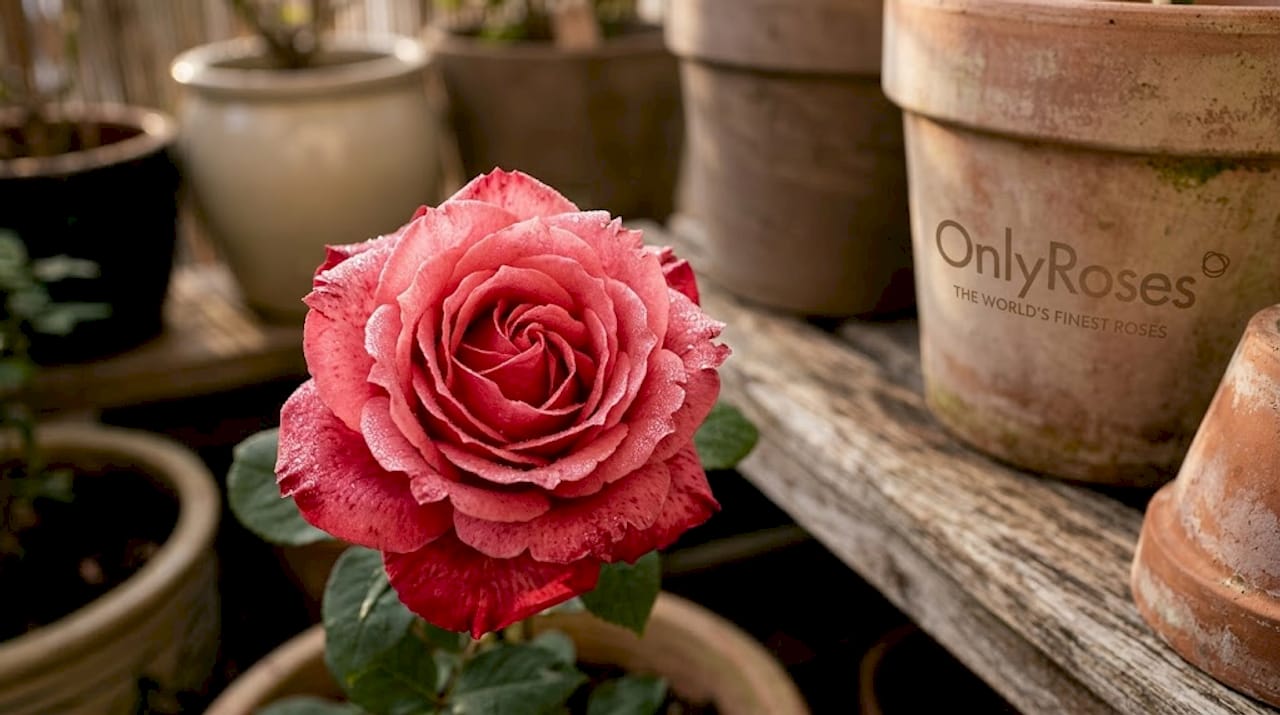
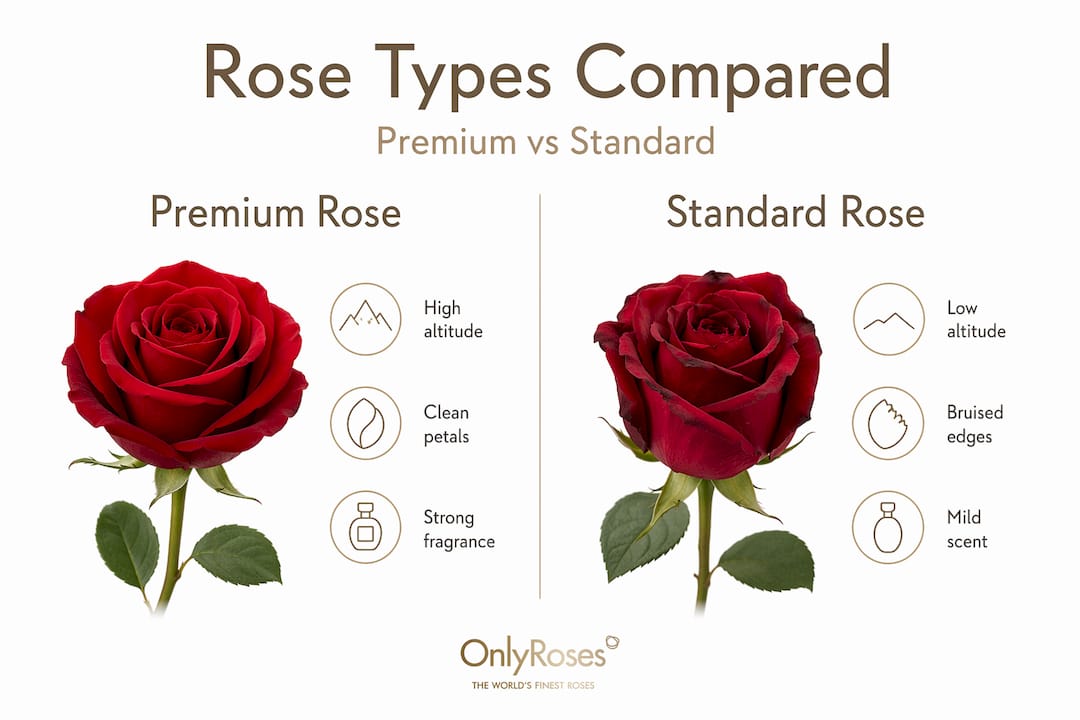
For gift buyers, luxury rose quality is defined by sourcing, altitude, and consistency. Roses grown at high altitudes in Ecuador, for instance, develop thicker petals, stronger stems, and more saturated colour because the growing conditions force the plant to work harder. The result is a bloom that looks genuinely different to a conventionally farmed rose.
Comparing premium rose types
| Characteristic | Standard florist rose | Premium Ecuadorian rose | Preserved rose |
|---|---|---|---|
| Bloom diameter | 4–6 cm | 6–9 cm | 5–8 cm (fixed at peak) |
| Stem length | 40–50 cm | 60–80 cm | Variable |
| Vase life | 5–7 days | 10–14 days | Months to years |
| Fragrance | Mild to moderate | Strong | Minimal (treatment affects scent) |
| Colour depth | Variable | Rich and consistent | Consistent |
Pro Tip: When selecting roses for a gift, look closely at the petals’ outer edges. Premium blooms hold a clean, unbruised border even after transit. Any browning or translucency at the petal tips suggests the rose was cut too early or stored poorly.
Rose care tips matter here too. To maintain the appearance of perfect roses at home: re-cut stems at an angle, change water every two days, and keep them away from direct sunlight and fruit bowls. Ethylene gas from ripening fruit accelerates petal drop, which is one of the least obvious but most common reasons roses fade quickly.
Rose perfection in cosmetics
The beauty industry uses “rose perfection” in an entirely different sense. Here, the word “perfection” refers to what the product does to your skin, not to the quality of the rose ingredient itself.
Pixi Beauty’s Rose Radiance Perfector is a useful example. It is a cruelty-free, vegan, rose-infused primer that uses light-reflecting particles and blurring agents to create the appearance of smoother, more luminous skin. The rose is the theme. The perfection is optical. Cosmetic formulations with rose extracts focus on the visual and sensory experience, using light-reflecting particles and blurring agents to create perceived flawlessness rather than addressing skin at a clinical level.
Common rose-driven beauty products and their visible effects include:
- Primers and perfectors: Blurring pores and creating an even base for makeup
- Face mists: Delivering an immediate glow and a faint floral scent
- Serums and facial oils: Providing hydration and supporting a plump, dewy finish
- Tinted moisturisers: Using rose pigments to add warmth and radiance to the complexion
Pro Tip: If you are drawn to rose-infused beauty products, look for those that list rose hip oil (Rosa canina) or Bulgarian rose water (Rosa damascena) in the first five ingredients. These signal a meaningful concentration rather than a token fragrance addition.
Jane Cunningham’s review of rose in beauty formulations also highlights the plant’s natural ability to soothe and brighten, which helps explain why it has become shorthand for radiant, finished skin in the beauty world. Rose and perfection are emotionally resonant words. Together, they create an expectation of something glowing and refined, which is precisely what these products aim to deliver visually.
Rose perfection across fragrance and other contexts
Understanding rose perfection fully requires acknowledging that the phrase travels across industries, picking up different meanings as it goes.
In perfumery, Robert Piguet’s Rose Perfection eau de parfum uses “perfection” to signify feminine elegance and purity. The rose here is central to the scent’s identity, but “perfection” is an aspirational descriptor, not a technical specification. It communicates mood and aesthetic rather than botanical accuracy.
In the Champagne world, rosé Champagne production varies significantly depending on whether the method is blending or maceration, affecting both colour and aroma. When producers invoke the idea of a “perfect rosé,” they are describing a style ideal, not a measurable endpoint.
The table below clarifies how “rose perfection” shifts in meaning across categories:
| Context | What “perfection” signals | How it is measured |
|---|---|---|
| Luxury floristry | Bloom quality, fragrance, longevity | Stem length, colour consistency, petal form |
| Cosmetics | Optical skin improvements | Blurring, brightening, luminosity |
| Fragrance | Elegance and sensory ideal | Scent profile, brand positioning |
| Rosé Champagne | Stylistic aspiration | Colour, blend, taste |
How to achieve rose perfection in gifting
Whether you are buying roses for someone else or investing in a display for your own home, a few deliberate choices make the difference between an average bouquet and a genuinely impressive one.
- Choose roses with a clear colour identity. Muddy or faded hues suggest age or poor storage. A premium rose should have a rich, clean colour from the outermost petal to the centre.
- Assess the fragrance before you commit. A rose with no scent is often bred purely for visual longevity. For gifting, a bloom with at least moderate natural fragrance feels more generous and considered.
- Consider the packaging as part of the experience. Presentation matters. A beautiful arrangement undermined by flimsy wrapping sends mixed signals about the value of the gift.
- Think about lifespan. For a gift that lasts beyond a week, preserved roses are worth considering seriously. They maintain their soft appearance for months without water, which makes them particularly relevant for home décor or a gift sent at distance.
- Research the brand’s sourcing. Roses from high-altitude farms are consistently superior in petal thickness and colour saturation. A brand that communicates its sourcing transparently tends to stand behind its quality. Roses account for 42% of the luxury flower market, and in that segment, sourcing is the single biggest predictor of quality.
Pro Tip: Display roses away from radiators and air conditioning units. Both strip moisture from petals rapidly. A cool room with indirect light is the ideal environment for keeping premium roses at their best.
My honest take on rose perfection
I have spent years looking at how “rose perfection” is used across premium floristry and beauty, and what strikes me most is how often the phrase does more emotional work than descriptive work. Brands and growers use it to signal aspiration rather than confirm a specification.
That is not entirely dishonest. A truly perfect rose does produce something close to an emotional reaction in the person receiving it. But I have learned to be precise when advising people. Ask what the perfection claim actually refers to. In a rose, does it mean altitude-grown, disease-resistant, and full-bloomed? In a cosmetic, does it mean light-diffusing particles and soothing botanicals? In a fragrance, does it mean a deliberate scent composition built around rose’s sensory appeal?
My view is that the consumers who get the most out of rose products are those who learn to read behind the marketing language. The word “perfection” costs nothing to print on a label. What matters is whether the product justifies it when you hold it, smell it, or give it to someone who matters.
— Anian
Experience rose perfection with Only-roses
If you want to see what genuine rose perfection looks like in practice, Only-roses is a good place to start.
OnlyRoses sources exclusively from high-altitude Ecuadorian farms, which is why their blooms consistently deliver the bloom size, colour depth, and petal quality that define a truly premium rose. Their Classic Rose Heart collection presents roses in signature hat boxes that make the presentation as considered as the flower itself. For something that lasts well beyond a typical bouquet, their preserved rose range maintains softness and colour for months. And if you want fresh stems with real visual impact, the Classic Rose Stems Pink Mix delivers exactly the kind of colour and freshness that rose perfection should feel like.
FAQ
What does “rose perfection” mean in floristry?
In floristry, rose perfection refers to specific quality traits including bloom size, petal symmetry, stem length, fragrance, and longevity. Premium roses grown at high altitude tend to score highest across all these criteria.
Is “Pink Perfection” an actual rose variety?
Yes. The ‘Pink Perfection’ hybrid tea rose is a recognised variety prized for its strong fragrance, disease resistance, warm pink double blooms, and repeat flowering habit.
What does “perfection” mean in rose beauty products?
In cosmetics, rose perfection describes the optical effects of rose-infused products, such as blurring pores, brightening skin, and creating a luminous finish. It is a visual and sensory claim rather than a botanical standard.
How long do preserved roses last compared to fresh roses?
Fresh premium roses typically last 10 to 14 days in ideal conditions. Preserved roses last significantly longer, maintaining their appearance for months or even years without water or special care.
How do I recognise a genuinely premium rose?
Look for rich, consistent colour, no browning at the petal edges, a noticeable fragrance, and a firm stem. Sourcing information from the seller is also a reliable quality indicator, particularly for roses grown at altitude.

