

TL;DR:
- Proper preparation, including hygienic tools and premium wrapping, ensures roses arrive fresh and elegant.
- Conditioning roses with extended hydration extends their vase life and enhances their natural beauty.
- Carefully packing and early-week shipping minimize transit stress and preserve floral freshness.
There is nothing quite as deflating as receiving a bouquet of luxury roses that have wilted, bruised, or lost their colour during transit. For a gift meant to convey elegance and thoughtfulness, a poorly prepared arrangement sends entirely the wrong message. Whether you are sending a curated arrangement or luxury rose delivery tips for a special occasion, the difference between roses that arrive breathtaking and those that disappoint comes down almost entirely to preparation before they leave your hands.
Table of Contents
- Selecting and preparing key materials
- Conditioning and hydrating roses: Foundation for longevity
- Expert wrapping and packing for safe transport
- Special considerations: Garden roses and delicate varieties
- A luxury florist’s perspective: What truly sets elegant rose delivery apart
- Send the perfect luxury roses with expertly prepared blooms
- Frequently asked questions
Key Takeaways
| Point | Details |
|---|---|
| Proper conditioning | Hydrate roses for at least four hours and use floral preservatives for freshness. |
| Luxury packaging | Wrap and box roses with premium materials to protect and present elegantly during delivery. |
| Delicate varieties need extra care | Garden and rare roses require longer hydration and careful handling to maintain quality. |
| Timing matters | Ship roses early in the week using overnight services to ensure they arrive in perfect condition. |
Selecting and preparing key materials
Before a single stem is cut, having the right materials in place is non-negotiable. Quality preparation is less about effort and more about using the correct tools from the start.
Essential materials checklist:
- Sharp, clean secateurs or floral scissors
- Sanitised buckets (one per variety if possible)
- Hydration solution or floral preservative
- Fresh, cool water
- Premium tissue paper and wrapping
- Branded ribbon or luxury finishing detail
- Moisture-retaining wrapping film
Sanitised buckets and proper hydration solutions prevent bacteria and ensure maximum freshness, which is why bucket hygiene is the single most overlooked variable in home rose preparation. Even trace soap residue or old organic matter can introduce bacteria that block stem uptake within hours.
The choice of wrapping materials matters far more than most people realise. Standard newspaper is permeable and dyes can transfer to petals. For luxury bouquet arrangements, opt for acid-free tissue, structured kraft paper, or branded florist wrapping to protect both the blooms and the overall presentation.
| Material | Basic option | Luxury option |
|---|---|---|
| Stem cutting tool | Kitchen scissors | Florist secateurs |
| Bucket hygiene | Rinse with water | Sanitise with bleach solution |
| Wrapping | Newspaper | Acid-free tissue |
| Hydration | Tap water | Floral preservative solution |
| Finishing detail | Elastic band | Branded satin ribbon |
Following industry rose care standards means treating your preparation space like a professional cutting room: clean, cool, and methodical.
Pro Tip: Wrapping roses in premium tissue before outer paper not only protects petals from friction but also creates a moment of luxury unveiling for the recipient. Two layers of tissue, folded inward at the top, signals care and elevates the gifting experience before the flowers are even seen.
Conditioning and hydrating roses: Foundation for longevity
With your materials ready, it is time for the essential first step: conditioning and hydrating your roses for maximum freshness.
Conditioning is the process of preparing roses to absorb water efficiently and consistently. Done correctly, it can extend vase life by several days, which matters enormously when roses are in transit for twelve hours or more.
Step-by-step conditioning process:
- Remove all packaging and inspect stems for damage
- Strip leaves and thorns from the lower third of each stem
- Cut stems at a 45-degree angle underwater, hydrate in cool water with preservatives for four or more hours, and remove lower leaves and thorns
- Place immediately into sanitised buckets filled with cool water and floral preservative
- Store in a cool, shaded area with good airflow for a minimum of four hours
- For garden varieties, allow overnight hydration before arranging or packing
When arranging a luxury bouquet, roses that have been properly conditioned hold their structure and colour far better under pressure. Advanced Floralife solutions or similar professional-grade preservatives can extend vase life by up to 60% compared to plain water alone.
“The difference between roses that arrive luminous and those that droop is almost always decided in the conditioning bucket, hours before the box is sealed.”
When exploring about luxury rose varieties, it is worth noting that high-altitude Ecuadorian roses, prized for their large blooms and dense petals, respond particularly well to extended hydration periods. Their robust structure rewards patience.
Pro Tip: Avoid crowding stems in a single bucket. Overcrowding restricts airflow around blooms and creates humid micro-environments where botrytis (grey mould) thrives. Use multiple, shallower buckets rather than one overloaded container.
Expert wrapping and packing for safe transport
Once your roses are fully hydrated, the next crucial step is packing them to survive their journey in immaculate condition.
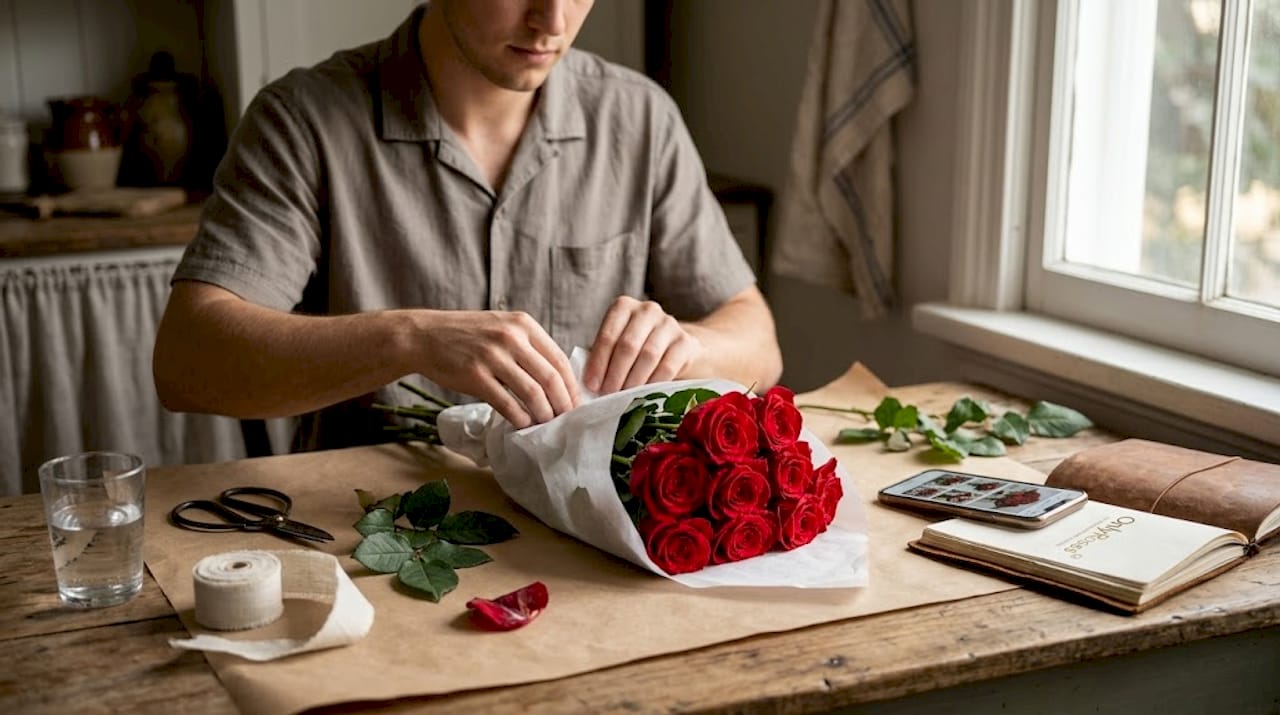
The goal of expert packing is twofold: protect the blooms physically and maintain stem hydration throughout transit. Skipping either compromises the final result.
Wrapping and packing steps:
- Lay roses on a flat, clean surface with heads aligned
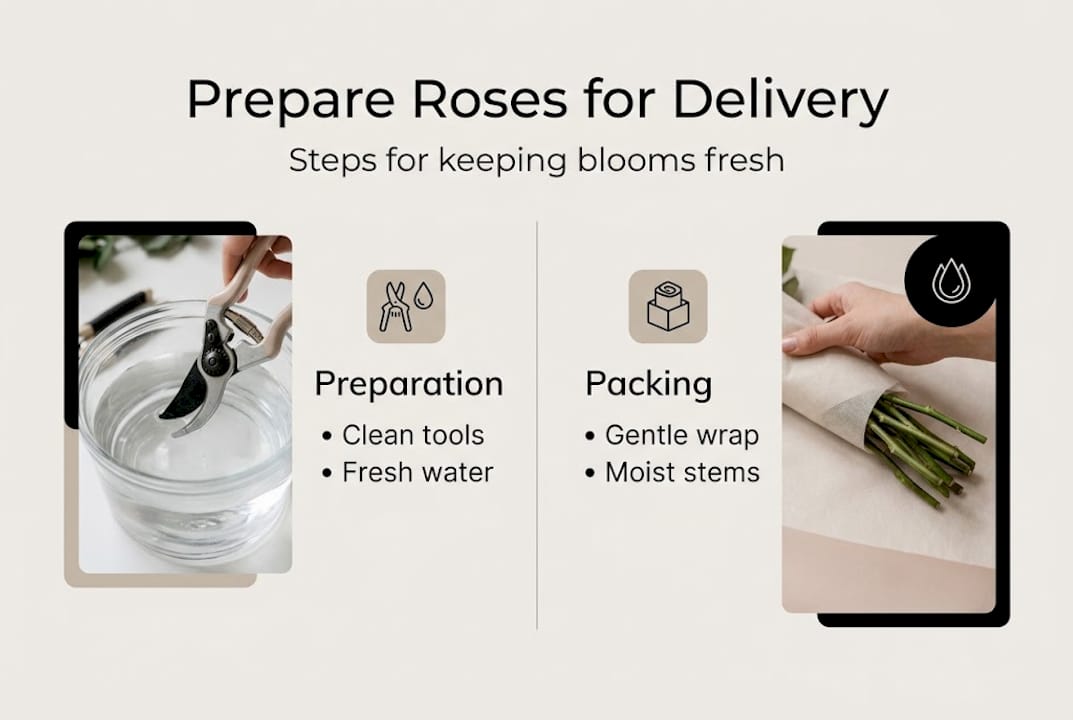
- Wrap stems in a damp paper towel, then seal lightly with cling film to retain moisture
- Wrap the entire bouquet in one layer of tissue, then a layer of structured paper
- Secure with ribbon or tape without compressing petals
- Place in a box that is approximately 1.5 times the bouquet size, with stems kept moist and cushioned, shipped overnight with labels
- Fill air gaps with crumpled acid-free tissue to prevent movement
- Label the outer box clearly as FRAGILE and THIS SIDE UP
| Feature | Basic packing | Luxury packing |
|---|---|---|
| Box size | Approximate fit | 1.5x bouquet length |
| Stem moisture | None | Damp towel and cling film |
| Bloom cushioning | Loose tissue | Structured tissue inserts |
| Labelling | None | FRAGILE, orientation marked |
| Shipping timing | Any day | Early week, overnight |
For elevating rose bouquet presentation, the box itself becomes part of the gift. Choose rigid, branded packaging where possible. When shipping through couriers, best flower shipping practices consistently highlight early-week dispatch paired with overnight services as the most reliable method to reduce transit risk and bloom stress.
Special considerations: Garden roses and delicate varieties
Certain varieties demand extra attention, especially for luxury gifting where garden roses or rare blooms are chosen.
Garden roses and heritage varieties are breathtaking when they arrive in perfect condition. They are also more fragile than standard commercially grown roses, with softer petals, more open blooms, and a higher sensitivity to temperature shifts.
Key steps for delicate and garden roses:
- Allow overnight hydration, removal of guard petals, and retrimming every two to three days to prevent damage and prolong beauty
- Keep blooms in paper wrapping during hydration to support petal structure
- Re-trim stems every 48 hours if conditioning ahead of a delivery date
- Store at 4 to 6 degrees Celsius in a dedicated floral cooler if available
- Avoid placing near ethylene-producing fruits such as apples or bananas
When selecting from classic rose stems or choosing rose varieties for a high-stakes occasion, matching the rose type to the recipient’s environment matters. A home without cooler storage should receive hardier varieties.
“Overfilling buckets is one of the most common mistakes made with premium roses. Each stem needs space to breathe, not just room to stand.”
For troubleshooting: if blooms wilt after unwrapping, re-cut stems and submerge entire heads in cool water for thirty minutes. Botrytis (grey mould) appears as fuzzy grey patches and is managed by improving airflow and reducing humidity during conditioning.
Pro Tip: Only remove outermost guard petals, which are the slightly tougher outer petals that protect inner layers during transit. Leave all fresh inner petals intact. Guard petals are a protective feature, not a flaw.
Following rose preparation nuance guidance from industry specialists reinforces just how much the extra hour of care before packing pays dividends in final presentation.
A luxury florist’s perspective: What truly sets elegant rose delivery apart
Here is something that rarely gets said plainly: the recipient will never see the conditioning bucket, the sanitised secateurs, or the careful hydration hours. And yet, those invisible steps are precisely what makes roses elegant and extraordinary upon arrival.
Luxury gifting is not just about how something looks. It is about how long that beauty holds. Meticulous preparation before delivery is what separates roses that dazzle for a week from those that begin to fade within a day. Affluent recipients recognise quality intuitively, even if they cannot name the reason.
“The measure of lasting luxury is not seen in the ribbon, but in how long the freshness lingers.”
Preparation does not support the gift. Preparation is the gift.
Send the perfect luxury roses with expertly prepared blooms
To make your next occasion unforgettable with flawless delivery, explore these handpicked resources and products.

At OnlyRoses, every bloom is selected, conditioned, and presented to the highest standard before it ever reaches your door. Whether you are browsing our luxury roses guide or curious about the enduring beauty of preserved roses explained, our collections are designed for those who refuse to compromise. Discover our curated selection of classic rose stems and experience the difference that genuine preparation makes.
Frequently asked questions
What is the best way to cut rose stems before delivery?
Cut rose stems at a 45-degree angle underwater using sharp, clean secateurs to maximise water uptake and freshness. This prevents air blocking the stem’s vascular system before hydration begins.
How do I keep rose stems moist during shipping?
Wrap moist stems in a damp paper towel, then seal lightly in cling film or use water tubes to contain moisture without risk of leaks during transit.
How long should I hydrate roses before arranging or shipping?
Hydrate roses in cool water with a floral preservative for at least four hours, and overnight for delicate garden varieties to ensure peak freshness.
Is it safe to ship roses over a weekend?
It is strongly recommended to avoid weekend shipping. Early-week, overnight shipping is the most reliable approach to minimise transit time and protect bloom quality.

