

Preserved flowers last up to 5 years, which is 97% longer than a fresh bouquet sitting on your sideboard for a fortnight. That single fact reshapes everything we assume about luxury floral gifting. For too long, beautiful flowers have been treated as fleeting pleasures, admired briefly and then discarded. Preserved flowers challenge that entirely. This article defines what preserved flowers are, explains the science behind their creation, compares them honestly with fresh, dried, and artificial alternatives, and shows you exactly why they have become the preferred choice for discerning collectors, interior designers, and thoughtful gift-givers alike.
Table of Contents
- What are preserved flowers?
- The science and process behind preservation
- Preserved vs dried vs fresh vs artificial: a direct comparison
- Key benefits of preserved flowers for gifting and décor
- How to select and care for preserved flowers
- Discover luxury preserved flowers and bouquets
- Frequently asked questions
Key Takeaways
| Point | Details |
|---|---|
| Unmatched longevity | Preserved flowers last up to five years, outperforming fresh blooms by 97 percent. |
| Luxury and sustainability | They offer both elegance and an eco-friendly solution for premium gifting or décor. |
| Distinct from dried or artificial | Preserved flowers are real blooms maintained by modern science, not synthetic or merely air-dried. |
| Care is simple | No watering needed—just gentle handling and the right placement for lasting beauty. |
What are preserved flowers?
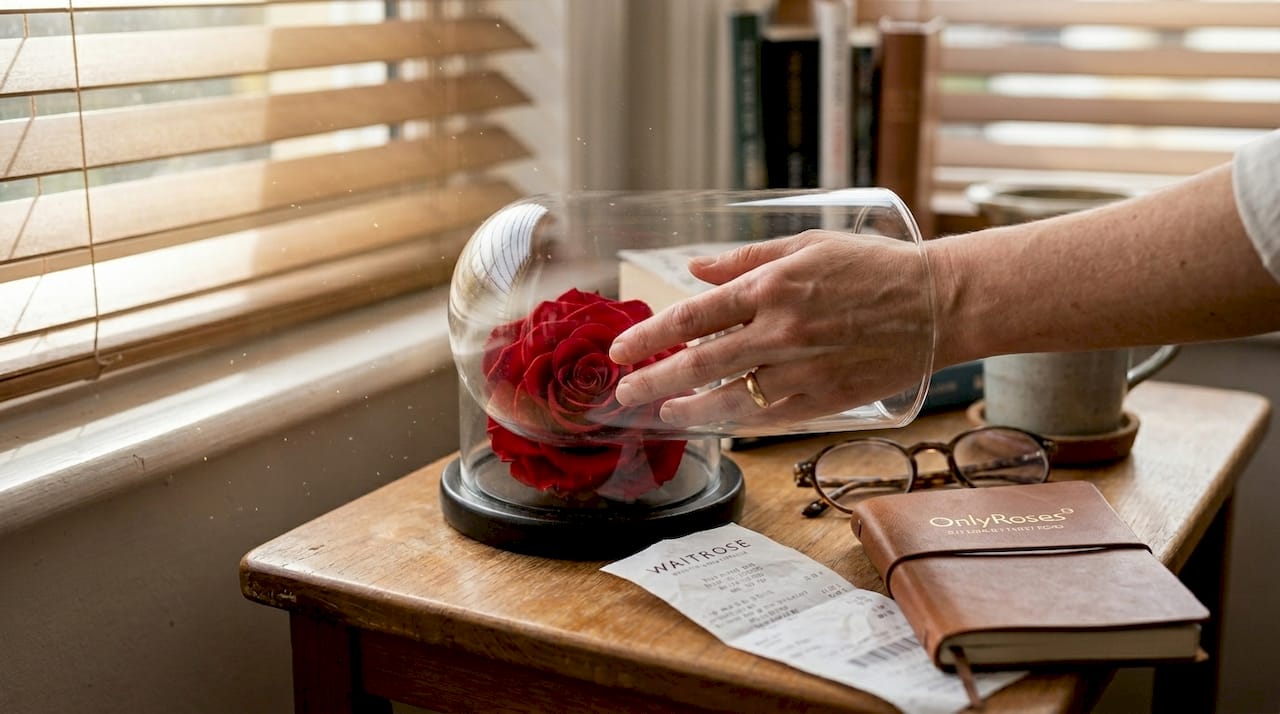
Preserved flowers are real blooms, harvested at their peak and then treated through advanced processes to halt their natural ageing. They are not dried flowers, which lose moisture through air exposure and become brittle and faded. They are not artificial flowers, which are synthetic replicas made from silk, plastic, or foam. Preserved flowers retain the softness, colour depth, and natural structure of a living bloom, often making them indistinguishable from fresh-cut roses at first glance.
The distinction matters enormously when you are selecting luxury roses for a meaningful occasion or a permanent decorative installation. Modern preservation methods, including vacuum freeze-drying, achieve 95%+ structural integrity, meaning the bloom holds its original form with remarkable fidelity. That level of precision is simply not possible with traditional drying techniques.
Here is a quick overview of how preserved flowers compare to the alternatives:
| Feature | Preserved | Dried | Fresh | Artificial |
|---|---|---|---|---|
| Origin | Real bloom | Real bloom | Real bloom | Synthetic |
| Texture | Soft, natural | Brittle | Soft | Stiff |
| Colour retention | Excellent | Faded | Vivid (briefly) | Consistent |
| Lifespan | 1 to 5 years | 6 to 12 months | 5 to 14 days | Indefinite |
| Maintenance | Minimal | Minimal | Daily watering | None |
| Luxury appeal | Very high | Moderate | High | Low |
Key characteristics that set preserved flowers apart:
- Tactile softness: petals feel natural, not papery or stiff
- Colour vibrancy: pigments are locked in during the preservation process
- Structural fidelity: blooms hold their original shape for years
- Versatility: suitable for unique rose gifts, statement décor, and bespoke installations
- No water required: ideal for enclosed displays, hat boxes, and travel gifts
The science and process behind preservation
Understanding the preservation process reveals why these flowers command a premium and why that premium is entirely justified. The two principal industrial techniques are vacuum freeze-drying and glycerin absorption, both of which deliver over 95% structural integrity, far superior to traditional air-drying.
The process follows a precise sequence:
- Harvesting at peak bloom: roses are cut at the exact moment of optimal colour and form
- Initial dehydration: moisture is carefully removed without damaging cell structure
- Solution impregnation: glycerin or a specialist preservative replaces the flower’s natural sap
- Colour treatment: pigments are stabilised or enhanced to maintain vibrancy
- Finishing and quality control: each bloom is inspected and prepared for presentation
By contrast, the RHS guide on drying flowers describes home air-drying as a simple, accessible method, but one that results in significant colour loss and structural fragility. It is a charming craft, not a luxury standard.
Preserved flowers also align with the values of eco-conscious luxury. Because they reduce floral waste and require no ongoing replacements, they represent a more considered approach to beautiful living. For those who appreciate luxury floral arrangements as a form of interior investment rather than a weekly expense, this matters.
Pro Tip: When selecting preserved roses, look for arrangements where the petals still have a slight give when gently pressed. Stiffness indicates lower-grade preservation, while softness signals that the glycerin process has been executed correctly.
The result is a flower that looks and feels alive, without the demands of a living plant. That is precisely what makes infinite roses such a compelling proposition for those who want enduring beauty without compromise.
Preserved vs dried vs fresh vs artificial: a direct comparison
With the methods understood, a direct comparison helps clarify which format suits your specific needs. Each flower type has its place, but for luxury gifting and high-end décor, the differences are significant.
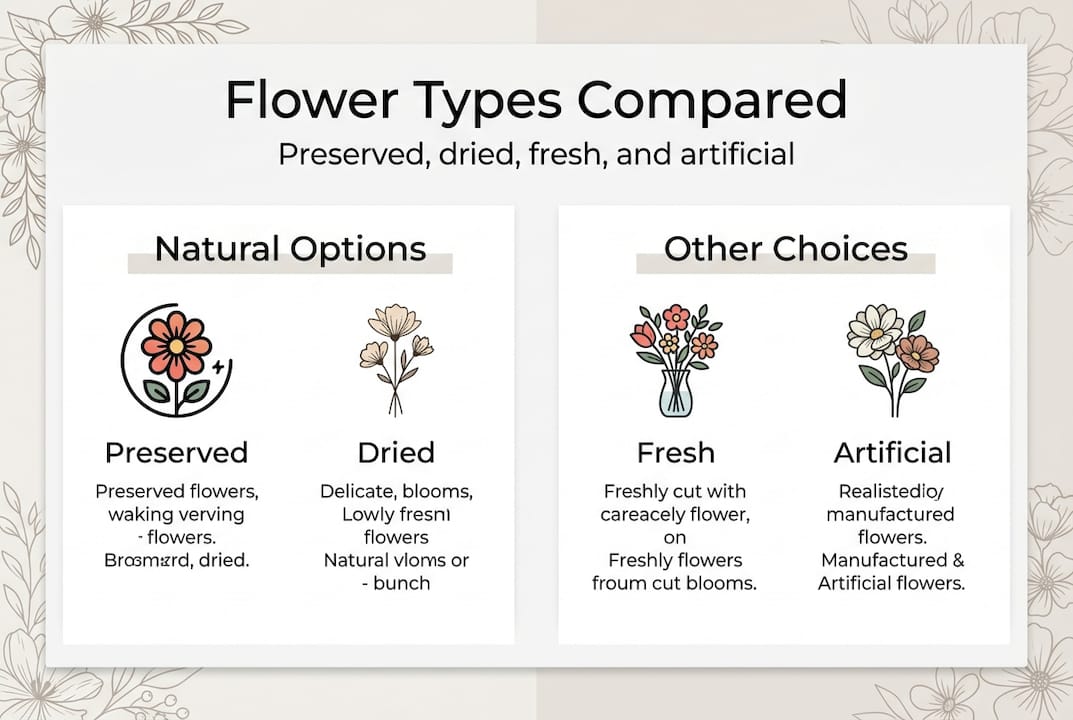
| Criteria | Preserved | Dried | Fresh | Artificial |
|---|---|---|---|---|
| Longevity | 1 to 5 years | 6 to 12 months | 5 to 14 days | Indefinite |
| Appearance | Lifelike | Rustic, faded | Vivid | Uniform |
| Care required | Minimal | Minimal | Daily | None |
| Eco credentials | Strong | Moderate | Weak | Poor |
| Price point | Premium | Low to mid | Mid | Low to mid |
| Gifting suitability | Excellent | Limited | Good | Poor |
Preserved flowers last 1 to 3 years, and up to five years with careful handling, compared to fresh flowers which typically last between five and fourteen days. That is not a marginal difference. It is a fundamental shift in value.
“Traditional air-drying achieves 50 to 70% structural integrity, while modern preservation methods exceed 95%, offering far more lifelike results.” Flower preservation
Dried flowers have enjoyed a resurgence in popularity, and they carry a certain rustic charm. But they are not a substitute for preserved flowers in a luxury context. The colour fading, the brittleness, and the limited palette make them unsuitable for the kind of refined presentation that fresh roses as gifts or preserved roses deliver at the highest level.
Artificial flowers, regardless of their quality, carry an inherent inauthenticity that discerning recipients notice immediately. For those seeking luxurious unique rose gifts, only a real bloom, preserved or fresh, carries the emotional weight that makes a gift truly memorable.
Key benefits of preserved flowers for gifting and décor
The case for preserved flowers in luxury contexts is compelling on multiple fronts. Their advantages extend well beyond simple longevity.
- Unrivalled lifespan: years of beauty with virtually no maintenance
- Natural authenticity: real petals, real fragrance notes, real texture
- Eco-conscious value: the preserved flower industry was estimated at $412 million in 2022, reflecting genuine demand driven by both luxury status and sustainability
- Versatility in display: enclosed hat boxes, open arrangements, wall installations, and table centrepieces
- Gifting confidence: no concern about wilting before the recipient even opens the box
- Statement décor: a preserved rose arrangement in a signature box becomes a permanent feature of a room, not a temporary flourish
For those considering infinite roses as gifts, the appeal is clear. A gift that remains beautiful for years carries a very different emotional resonance than one that fades within a week. It communicates permanence, thoughtfulness, and genuine quality.
The types of luxury arrangements available with preserved roses are also far broader than most people realise, from single stems in minimalist packaging to elaborate multi-bloom installations designed for corporate lobbies or private residences.
Pro Tip: Display preserved flowers away from direct sunlight and high humidity. A north-facing shelf or an interior room with stable temperature will extend their lifespan significantly. Avoid bathrooms and kitchens where moisture fluctuates.
How to select and care for preserved flowers
Choosing preserved flowers well requires a slightly different eye than selecting fresh blooms. Quality varies considerably between suppliers, and knowing what to look for protects your investment.
- Verify the preservation method: ask whether vacuum freeze-drying or glycerin absorption was used. These are the gold standard techniques.
- Assess colour richness: vibrant, even colour across all petals indicates a high-quality process. Patchy or faded tones suggest inferior treatment.
- Check petal texture: gently press a petal. It should yield slightly, not crumble or feel plasticky.
- Examine the source: roses from high-altitude Ecuadorian farms, like those used by OnlyRoses, have naturally larger blooms and denser petals that preserve exceptionally well.
- Review packaging: premium preserved roses should arrive in protective, elegant packaging that prevents crushing and moisture exposure during transit.
Once you have your arrangement, care is refreshingly simple. Preserved flowers last one to three years typically, and up to five years in optimal indoor conditions, provided you follow a few straightforward guidelines.
For ongoing maintenance, dust gently with a soft brush or a low-pressure air duster every few weeks. Never mist with water. Keep arrangements away from air conditioning vents, radiators, and direct sunlight. If a bloom begins to look tired, carefully reposition it within the arrangement to refresh the overall composition.
For luxury roses displayed in hat boxes, the box itself provides excellent protection. Simply keep the lid off for display and replace it if the arrangement needs to be stored temporarily.
Pro Tip: If your preserved arrangement begins to look slightly flat after a year or two, try adding a single fresh element, such as a sprig of eucalyptus or a dried botanical, to refresh the composition without replacing the roses themselves.
Discover luxury preserved flowers and bouquets
If you are ready to invest in floral beauty that endures, OnlyRoses offers a curated selection of preserved roses presented in signature packaging that is as considered as the blooms themselves.
From classic rose stems in vivid, carefully selected colours to the extraordinary infinite rose silver punch bowl, each arrangement is designed to make an immediate and lasting impression. Whether you are gifting for a milestone occasion, furnishing a private residence, or sourcing centrepieces for a corporate event, the range at OnlyRoses offers the quality and elegance that discerning clients expect. Every preserved rose is sourced from Ecuador’s finest high-altitude farms, treated to the highest preservation standards, and presented in packaging that reflects the value of what is inside.
Frequently asked questions
How long do preserved flowers actually last?
They typically last between one and three years, and sometimes up to five years with excellent care and optimal indoor conditions.
Do preserved flowers need water or daily maintenance?
No, preserved flowers require no watering at all. Occasional gentle dusting and careful handling are all that is needed to keep them looking their best.
Are preserved flowers environmentally friendly?
Yes. Because they last so much longer than fresh flowers, they reduce floral waste considerably and require far fewer replacements over time, making them a more sustainable choice.
Can you use preserved flowers for weddings or corporate events?
Absolutely. Their lifelike appearance, structural stability, and exceptional longevity make them ideal for luxury events, bespoke installations, and high-impact arrangements that need to look perfect from setup through to the final moment of an occasion.

